India’s Potential Cricket Boycott against Pakistan and Bangladesh
India’s Potential Cricket Boycott against Pakistan and Bangladesh Could Cost approx ₹350 Crore to the neighboring countries
India’s upcoming cricket tour to Bangladesh for a limited-overs match and next the Asia Cup, where Pakistan is set to feature, are under serious threat following the recent terror attack in Pahalgam, Jammu & Kashmir, which claimed the life of 26 civilians. BCCI has been advised to consider a complete cricket boycott the Pakistan Cricket Board (PCB) — a move that could soon extend to Bangladesh as well, following controversial remarks from a retired Bangladeshi army general and ongoing diplomatic tensions.
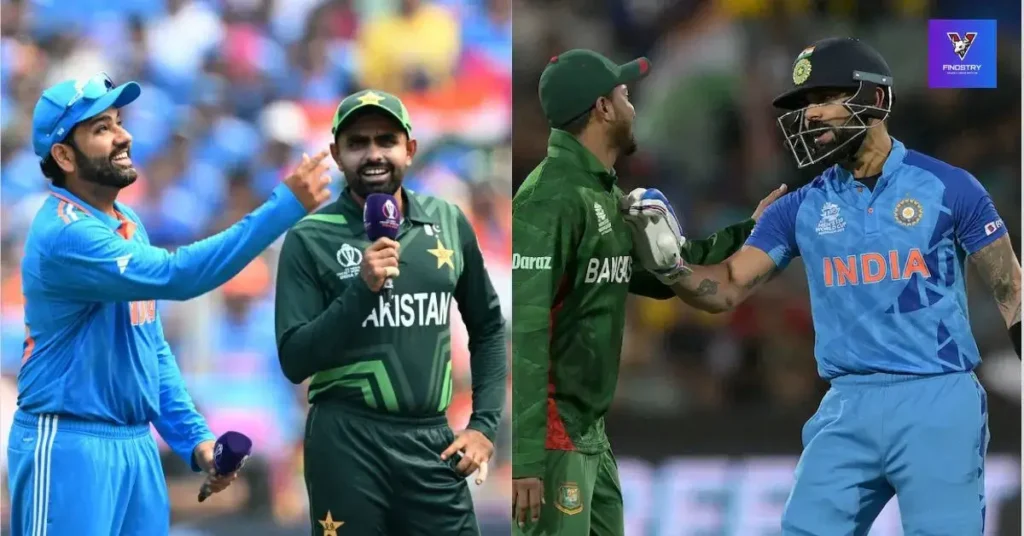
India and Pakistan have not played any bilateral cricket series since 2012–2013, they have met head-to-head only in ICC and Asia Cup events. BCCI may extend to cut all cricketing ties with Pakistan, including women’s and youth matches. Relations with Bangladesh have also deteriorated recently since the Sheikh Hasina-led administration was overthrown last year and followed by the attacks on the Hindu minority community in Bangladesh.
A controversial Facebook post by retired Major General ALM Fazlur Rahman, suggesting Bangladeshi aggression and threat towards India’s northeast region with the support from China, has escalated tensions too. As a result, India is reportedly re-evaluating its upcoming limited-overs tour to Bangladesh, which is scheduled before the Asia Cup.
Also Read: Suraj Randiv, An IPL player is now a Bus Driver
According to Times Now report, if India decides not to play the future and upcoming matches against the two teams- Pakistan and Bangladesh, the financial repercussions will be massive. The Pakistan Cricket Board (PCB) may lose an estimated amount of ₹220 crore and the Bangladesh Cricket Board (BCB) may face a financial loss of around ₹130 crore. These losses will arise from the broadcasting contracts, match revenues and the absence of high-profile India matches which are crucial part for revenue generation.
There is a good chance of India cancelling all the scheduled matches against Bangladesh and Pakistan, taking into consideration the probable threats to the Men in Blue team. The boycott will probably cause a great loss to both countries. Over the last years, India has contributed a lot to International Cricket Council (ICC), considering the rise and promotion of the Indian Premier League (IPL). It is predicted that 70 to 80 percent of ICC’s revenues comes from the Board of Control for Cricket in India (BCCI) only, which creates the funding source for other cricket boards like PCB and BCB.
During India’s last tour to Bangladesh in December 2022, the Bangladesh Cricket Board (BCB) has earned around ₹70 to ₹80 crores from the three ODIs and two Tests matches played at Bangladesh soil. If India decides not to play the upcoming tour to Bangladesh in August 2025, BCB would likely face similar financial losses or maybe even greater than the previous loss incurred in the year 2022.
Additionally, if the BCCI requests that Bangladesh and Pakistan be placed in separate groups in future ICC tournaments, both the boards could lose around ₹20–30 crore in shared broadcasting revenue per tournament cycle.
While the BCCI has not yet issued an official statement, a final decision on India’s participation in the Bangladesh tour and Asia Cup is expected by July, before the squad announcement by the selection committee led by Ajit Agarkar.
The implications of a boycott go far beyond the pitch, potentially reshaping cricket diplomacy and finances in the subcontinent.
(Disclaimer: The information provided in this article is for general informational purposes only. While every effort has been made to ensure the accuracy and reliability of the data at the time of publication but readers are advised to verify details independently and consult official sources for the latest updates. FINOSTRY and author are not responsible for any errors, omissions, or outcomes related to the use of this information.)

Loves to write about personal finance, credit cards rewards, banking, mutual funds, fixed deposits, savings strategies, investment planning, tax-saving options, digital banking and wealth building techniques. With over 12 years of experience he aims to provide practical financial knowledge that is easy to understand for both beginners and experienced readers.
Related posts:
 Preparing blueprint for the first 100 days of our 3rd term: PM Modi
 Semiconductor manufacturing will put Assam on global map, says Ratan Tata
 Court sends Delhi CM to ED custody till March 28 in liquor policy case
 An industry body predicts that gold prices are poised to hit approximately Rs 70,000 per 10 grams in 2024.
 Breaking News: New York Judge Partially Lifts Gag Order on Trump in Hush Money Case
 Elevate Your Spending: RuPay Credit Card on UPI Set to Offer Competitive Rewards from September 1
 India and the US to sign a new defense framework, reports CNBC-TV18 citing a senior White House official.
 Recent Bonus, Stock Split, and Dividend Announcements by Vedanta, Railtel Corporation of India, Shukra Pharmaceuticals and other companies
 LPG Gas Price has been hiked by ₹50 Per Cylinder: Here’s an update
 Suraj Randiv, An IPL player is now a Bus Driver
 Operation Sindoor: India Cancels over 300 Flights and Shuts Down 25 Airports After Missile Strikes on Camps
 Trump Warns Apple: Manufacture iPhones in America or Face Tariffs
 Smart meters will not be installed in West Bengal: The Power Minister announces in the Assembly.
 From July 2025, no Tatkal Railway ticket booking without Aadhaar authentication, Restrictions for Agents- Know what will change.
 ‘Kaanta Laga’ Fame Shefali Jariwala Passes Away at 42; Celebrities Mourn at Sudden Demise